🌸 Japanese Anime Frame
Художественный аниме-образ с детальной прорисовкой.
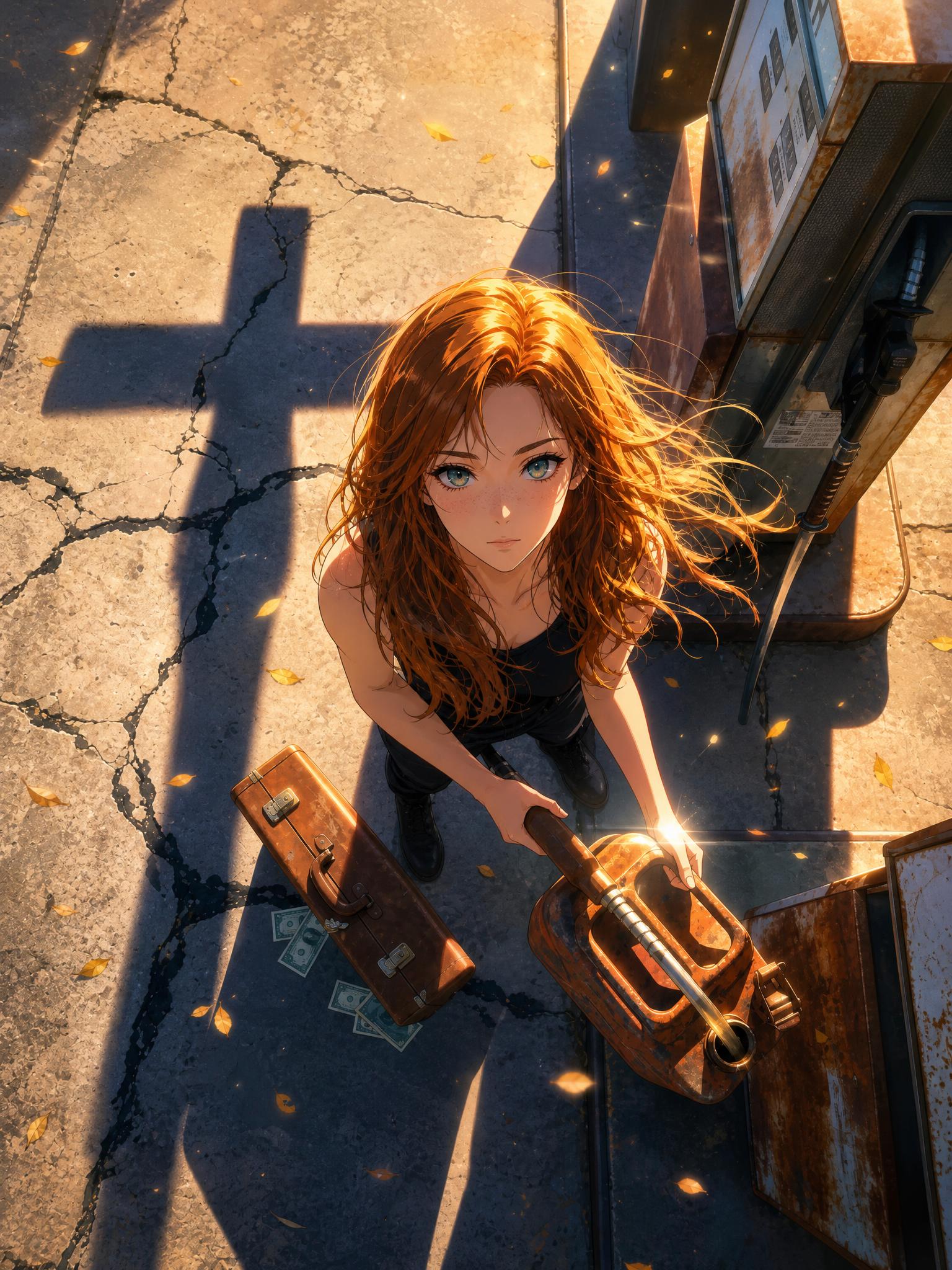
Transform the provided reference image into a stunning high-budget cinematic Japanese anime frame, fully preserving the exact original composition, pose, camera angle, perspective, surrounding environment, and narrative context of the scene. Every element must remain in its original position — nothing added, nothing removed, nothing repositioned. Character rendering: Redesign all characters with refined elegant anime proportions — slightly elongated limbs, slimmer waist, defined shoulders, graceful posture. Render large expressive detailed anime eyes with vivid iris reflections, multi-layered highlights, and deep luminous color depth. Hair must be naturally flowing, strand-detailed, with rich volumetric shading — individual hair groups catching light with glossy specular highlights and soft translucent edges. Facial features should carry rich nuanced expression — subtle emotion in the eyes, mouth, and brow, avoiding flat or generic anime faces. Clothing must be highly detailed with visible fabric weave, realistic folds, wrinkle physics, stitching details, and material-accurate shading — leather looks like leather, cotton like cotton, silk like silk. Linework and shading: Apply clean precise black ink outlines with confident variable stroke weight — thicker on outer silhouettes, thinner on inner details and facial features. Use cinematic cel-shading with smooth soft gradients blending into sharp shadow cutoffs. Add rich multi-layered shadows — primary deep shadows, secondary ambient occlusion, and subtle reflected color bouncing from nearby surfaces. Apply delicate rim lighting and thin contour backlighting along character edges and hair to separate them from the background with a glowing cinematic halo. Atmospheric dynamics: Add gentle environmental motion — soft wind rustling hair and clothing edges, floating dust particles catching light, scattered leaves drifting lazily, faint wisps of smoke or steam curling through the air, and gorgeous volumetric god rays streaming through windows, doorways, or gaps in the environment. Every particle should have its own micro-highlight and soft bokeh glow. Lighting and color: Push dramatic cinematic anime lighting — rich warm golden tones contrasting with cool blue-purple ambient shadows, strong directional key light casting defined shadows, soft atmospheric haze in the background creating layered depth separation. Add vivid specular highlights on reflective surfaces — glasses, eyes, metal, wet surfaces, polished objects — each with multi-point star-shaped or soft bloom glare. Color palette should feel lush, saturated, and emotionally evocative — deep teals, warm ambers, soft magentas, and rich blacks. Background and environment: Re-render the entire surrounding environment in richly detailed anime style with painterly textures — every surface should have visible material quality: wood grain, concrete texture, glass reflections, fabric patterns, atmospheric fog layers. Background should have softer focus and lighter detail density compared to foreground characters, creating natural anime-style depth of field. Final quality benchmark: The result must look like an official key frame from a world-class theatrical anime film by studios like Makoto Shinkai (CoMix Wave), Kyoto Animation, or Studio Ghibli at their peak — atmospheric, elegant, emotionally resonant, and visually breathtaking. Every pixel should feel intentional and polished. Strictly no violence, no explosions, no destruction, no speed lines, no action effects, no manga screentones, no text, no logos, no watermarks, no UI elements. Preserve the exact original aspect ratio and frame format.
Вирусная эстетика анимации и 3D-арта мгновенно цепляет взгляд в ленте соцсетей, вызывая желание примерить этот образ на свое селфи.